Spis treści
Publikacje
Postawy rodzicielskie a wypalenie rodzicielskie. Mediacyjna rola aleksytymii, depresji i podejmowanych strategii radzenia sobie ze stresem
Celem badania była analiza związku między wypaleniem rodzicielskim a postawami
rodzicielskimi z uwzględnieniem mediacyjnej roli aleksytymii, depresji oraz podejmowanych strategii
radzenia sobie ze stresem. Postawy rodzicielskie określone na wymiarach: akceptacja, autonomia,
wymagania i niekonsekwencja mają związek z poziomem wypalenia rodzicielskiego wobec własnych
dzieci. Przyjęto, iż ważnym czynnikiem sprzyjającym jest aleksytymia, depresja oraz styl radzenia
sobie ze stresem skoncentrowany na emocjach.
Metoda: Badanie przeprowadzono z udziałem 112 rodziców (M = 39,16; SD = 5,39) posiadających
dzieci w wieku od 3 do 15 lat. W celu weryfikacji hipotez badawczych użyto następujących
kwestionariuszy: Kwestionariusz Wypalenia Rodzicielskiego (Parental Bournout Assessment, PBA);
Kwestionariusz do pomiaru aleksytymii (Toronto Alexithymia Scale, TAS-20); Kwestionariusz
Retrospektywnej Oceny Postaw Rodziców (Parental Bonding Questionnaire, KPR-Roc), Skala Depresji
Becka (Beck Depression Scale, BDI), Kwestionariusz Radzenia Sobie w Sytuacjach Stresowych (Coping
Inventory for Stessful Situations, CISS).
Rezultaty: W wyniku przeprowadzonych analiz statystycznych wykazano związek pomiędzy
postawą rodzicielską matki a wypaleniem rodzicielskim. Ponadto stwierdzono istotną zależność
aleksytymii, depresji oraz stylów radzenia sobie ze stresem z wypaleniem rodzicielskim. Czego
następstwem była analiza mediacyjnego wpływu wspomnianych zmiennych na relację pomiędzy
retrospektywnymi postawami rodzicielskimi ze strony matek a wypaleniem rodzicielskim. Analizę
mediacji wielokrotnej wykonano przy pomocy niestandardowego makro do SPSS PROCESS (Hayes,
2018), która okazała się być istotna statystycznie dla wymagań, niekonsekwencji, a także autonomii
i akceptacji ze strony Matki. Istotnymi mediatorami w każdym modelu były aleksytymia, depresja
oraz styl radzenia sobie ze stresem skoncentrowany na emocjach. Podobnych zależności nie
wykazano w odniesieniu do relacji z ojcem.
Konkluzje: Przeprowadzone badanie wskazuje na istnienie silnych związków między postawą
rodzicielską matki a wypaleniem rodzicielskim wobec własnych dzieci. Aleksytymia, depresja i styl
radzenia sobie ze stresem skoncentrowany na emocjach zwiększają ryzyko wystąpienia wypalenia
rodzicielskiego.
Parental attitudes and susceptibility to impulsive aggression. The mediation role of alexithymia
Aims: The study aimed at analyzing the relationship between parental attitudes and impulsive aggression, including the mediation role of alexithymia.
Methods: The following tools were used in the studys: Parental Bonding Instrument; Toronto Alexithymia Scale; BussPerry Aggression Questionnaire (BPAQ). The study sample was randomly selected from the general population, 197 people aged 22 to 43 (M = 34.42; SD = 5.47) in total. The study sample included slightly more women (53.8%) than men. Considering the level of education, the largest number of people had higher education (74.1%); the others had secondary education (14.2%) or a bachelor’s degree(11.7%).
Resultss: The analyses – correlation, regression, and mediation – showed a moderate relationship between maternal control and difficulties in identifying emotions as well as between fatherly control and overall
alexithymia scores and also separately with one of its components – externally-oriented thinking. Maternal control is associated with the development of hostility. On the other hand, fatherly control increases the
tendency to physical aggression, hostility, and anger. Alexithymia is strongly related to physical aggression, hostility, and anger and it is an important mediator between maternal and fatherly control and various aspects of aggression, increasing its intensity. Age correlates positively with the intensity of alexithymia.
Conclusionss: The study shows strong relationships between parental attitudes, mainly control, and the tendency to develop alexithymia and to various manifestations of aggression. Alexithymia blocks the processes of identification and verbalization of emotions. As a result, the language is no longer used to regulate and control excitement and thus, it increases
the risk of aggressive behavior. The results show that future research on the relation ship between parental attitudes, alexithymia and aggression shall also include other dimensions of the emotional regulation.

Postawy rodzicielskie a skłonność do impulsywnej agresji. Mediacyjna rola aleksytymii
Cel: Celem badania była analiza związku między postawami rodzicielskimi a skłonnością do impulsywnej agresji z uwzględnieniem mediacyjnej roli
aleksytymii.
Metoda: W badaniu użyto następujących narzędzi: Kwestionariusz Retrospekcyjnej Postawy wobec Rodziców (Parental Bonding Instrument); Kwestionariusz do pomiaru aleksytymii (Toronto Alexithymia Scale); Kwestionariusz Agresji Buss-Perry (The Aggression Questionnaire, BPAQ).
Badanie przeprowadzono na losowo wybranej grupie osób z populacji ogólnej.
W sumie 197 osób w wieku od 22 do 43 lat (M = 34,42; SD = 5,47). W próbie nieznacznie większy odsetek stanowiły kobiety (53,8%). Pod względem poziomu wykształcenia dominowały osoby posiadające wyższe wykształcenie (74,1%); pozostały procent stanowiły osoby z wykształceniem średnim (14,2%) oraz licencjackim (11,7%).
Rezultaty: W wyniku przeprowadzonych analiz, korelacji, regresji oraz mediacji wykazano umiarkowany związek między kontrolą matki a trudnościami w identyfikacji emocji oraz kontrolą ze strony ojca a aleksytymią, jako całością, oraz osobno z operacyjnym stylem myślenia. Kontrola ze strony matki wiąże się z rozwojem skłonności do wrogości. Z kolei kontrola ze strony ojca zwiększa skłonność do agresji fizycznej, wrogości i gniewu. Aleksytymia silnie wiąże się z agresją fizyczną, wrogością oraz gniewem
i jest istotnym mediatorem w relacji między kontrolą matki i ojca a różnymi aspektami agresji, zwiększając jej natężenie. Wiek koreluje pozytywnie z natężeniem aleksytymii.
Konkluzje: Przeprowadzone badanie wskazuje na istnienie silnych związków między postawami rodziców, głównie kontrolą, a tendencją do rozwoju aleksytymii oraz skłonnością do różnych przejawów agresji. Aleksytymia, blokując procesy identyfikacji i werbalizacji emocji powoduje, że język nie służy do regulacji i kontroli pobudzenia, zwiększając tym samym ryzyko wystąpienia zachowań agresywnych. Przeprowadzone badanie wskazuje, że
w kolejnych badaniach należy uwzględnić także inne wymiary dotyczące regulacji emocji, badając związki między postawa-
mi rodzicielskimi, aleksytymią a agresją.
Relationship between interoceptive sensibility
and somatoform disorders in adults with
autism spectrum traits. The mediating role of
alexithymia and emotional dysregulation
Objective
The purpose of the study is to analyses the relationship between interoceptive sensibility and somatoform disorders among persons with Autism Spectrum Disorder (ASD). It has been assumed that the interoceptive sensibility is accompanied by a high level of alexithymia and emotion dysregulation in somatoform disorders.
Methods
Persons under the care of the foundation helping people with ASD were asked to participate in the study. In total, 205 people took part in the research. The participants aged from 18 to 63 (M = 34.91; SD = 8.44). The ASD group comprised 79 persons (38.5% of subjects). The control group comprised 126 individuals (61.5% of subjects). Participants completed self-report questionnaires measuring autism (AQ), interoceptive sensibility
(BPQ), alexithymia (TAS20), emotional dysregulation (DERS), and somatoform disorder (SDQ).
Results
The analyses showed a moderation effect of the group, which indicates the existence of a relationship between interoceptive sensibility and somatoform disorders to the greater extent in the clinical group than in the control group. In addition, the serial multiple media tion model analysis allowed to verify the mediating effect of emotion dysregulation and
alexithymia on the abovementioned relationship. The indirect effect, which assumed the mediating role of alexithymia turned out to be significant, contrary to the indirect effect where emotion dysregulation was a mediator in a situation where both variables were applied simultaneously.
Conclusions
Interoceptive sensibility correlated with level of alexithymia, in particular, difficulties in identifying and verbalizing emotions and emotion dysregulation in the lack of emotional awareness and lack of emotional clarity and is associated with somatoform disorders in the investigated group regardless of participants’ belonging to the ASD or control group.
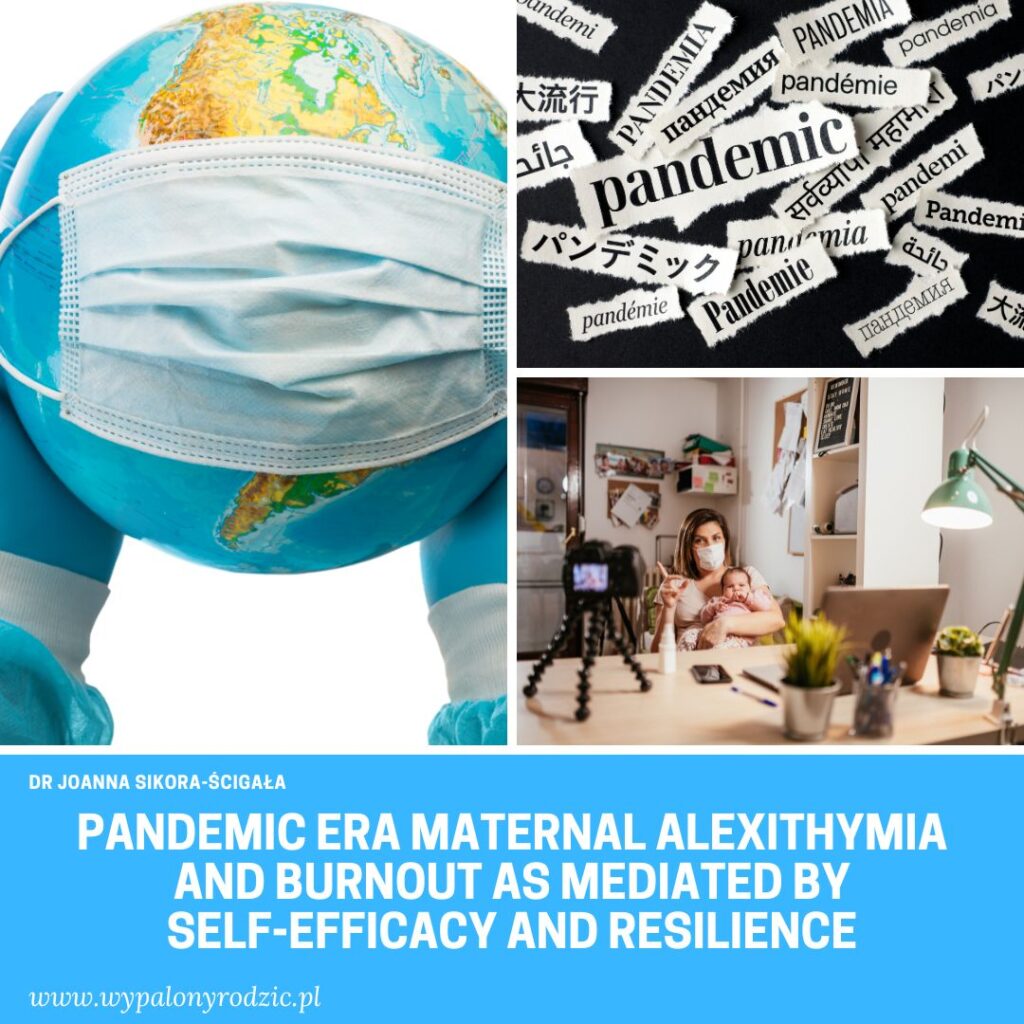
Pandemic Era Maternal Alexithymia and Burnout as Mediated by Self-Efficacy and Resilience
Parenting is considered a complex and stressful activity that is associated with the development of parental burnout, especially
in the COVID -19 pandemic where mental health problems have a huge impact on individual lives and the division of family
roles due to frequent closures. The aim of this study was to investigate whether various psychological characteristics such as
alexithymia, resilience, and self-efficacy particularly influence the extent of parental burnout in mothers. For the study, 110
aged women qualified. Only mothers who had full-time jobs and worked from home were invited to participate in the study.
Parental burnout was measured using the Parental Burnout Assessment. Level of alexithymia was measured with the Toronto
Alexithymia Scale -20. Overall level of resilience as a personality trait was assessed with the Resilience Measurement Scale
SPP -25. Beliefs about efficacy in dealing with difficult situations and obstacles were examined with the Generalized Self-
Efficacy Scale. The results show that alexithyms had significantly higher levels of burnout than non-alexithyms on the first
and second measures. In addition, a significant increase in burnout levels over time was found in the alexithymic group.
Alexithymia was a strong predictor of parental burnout and tends to predict a decrease in perceived self-efficacy, which in turn
predicts an increase in parental burnout. Finally, alexithymia predicts increased parental burnout through lower psychological
resilience. Parents with high levels of parental burnout feel overwhelmed by the stresses associated with their parenting role
and often express doubts about their ability to be competent parents.
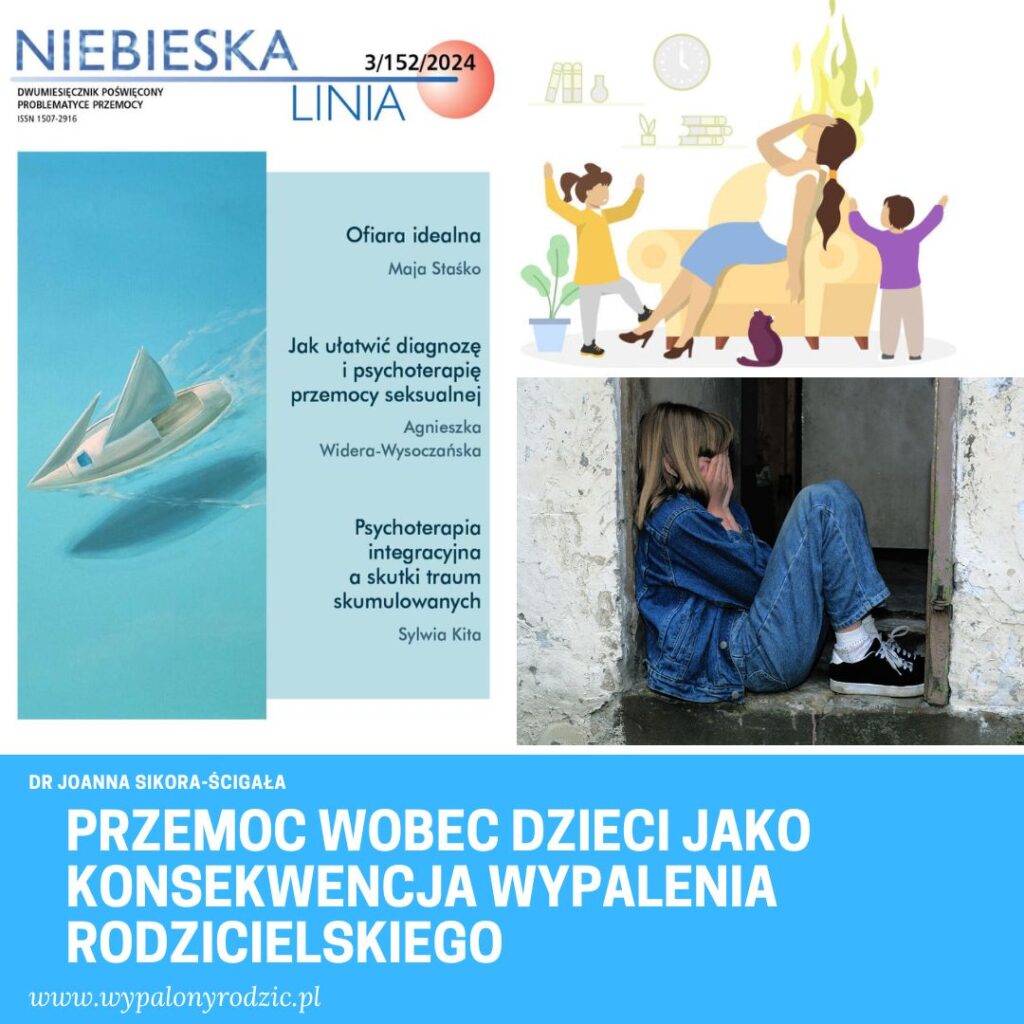
Przemoc wobec dzieci jako konsekwencja wypalenia rodzicielskiego
Kiedy rodzicom nieustannie brakuje zasobów potrzebnych do radzenia sobie ze stresorami oznacza to, że mogą być narażeni na wypalenie rodzicielskie. Wypalenie rodzicielskie wynika z chronicznej nierównowagi między zasobami a stresorami występującymi w sferze rodzicielskiej. Definiuje się je jako stan intensywnego wyczerpania związanego z pełnieniem roli rodzicielskiej, w którym rodzic czuje się emocjonalnie odseparowany od swoich dzieci i wątpi w swoje możliwości bycia dobrym rodzicem.
Samo myślenie o swojej roli jako rodzica sprawia, że czuje, iż osiągnął kres swoich możliwości. W rezultacie zaczyna się emocjonalnie oddalać od swoich dzieci, coraz mniej angażuje się w relacje z nimi, a swoje interakcje ogranicza do aspektów funkcjonalno-instrumentalnych kosztem aspektów emocjonalnych. W związku z tym nie czuje się już dobrym rodzicem i traci przyjemność z bycia ze swoimi dziećmi, a w efekcie, mniej lub bardziej świadomie, zaczyna coraz częściej podejmować zachowania zaniedbujące i przemocowe względem swoich dzieci.
Jeśli powyższa tematyka nie jest Ci obca, pracujesz z rodzicami lub sam jesteś rodzicem u kresu swojej wytrzymałości zachęcam do lektury artykułu pt. „Przemoc wobec dzieci jako konsekwencja wypalenia rodzicielskiego” dostępnego w najnowszym numerze czasopisma Niebieska Linia.
Podcast
Jak poradzić sobie z wypaleniem rodzicielskim?